Blog Details
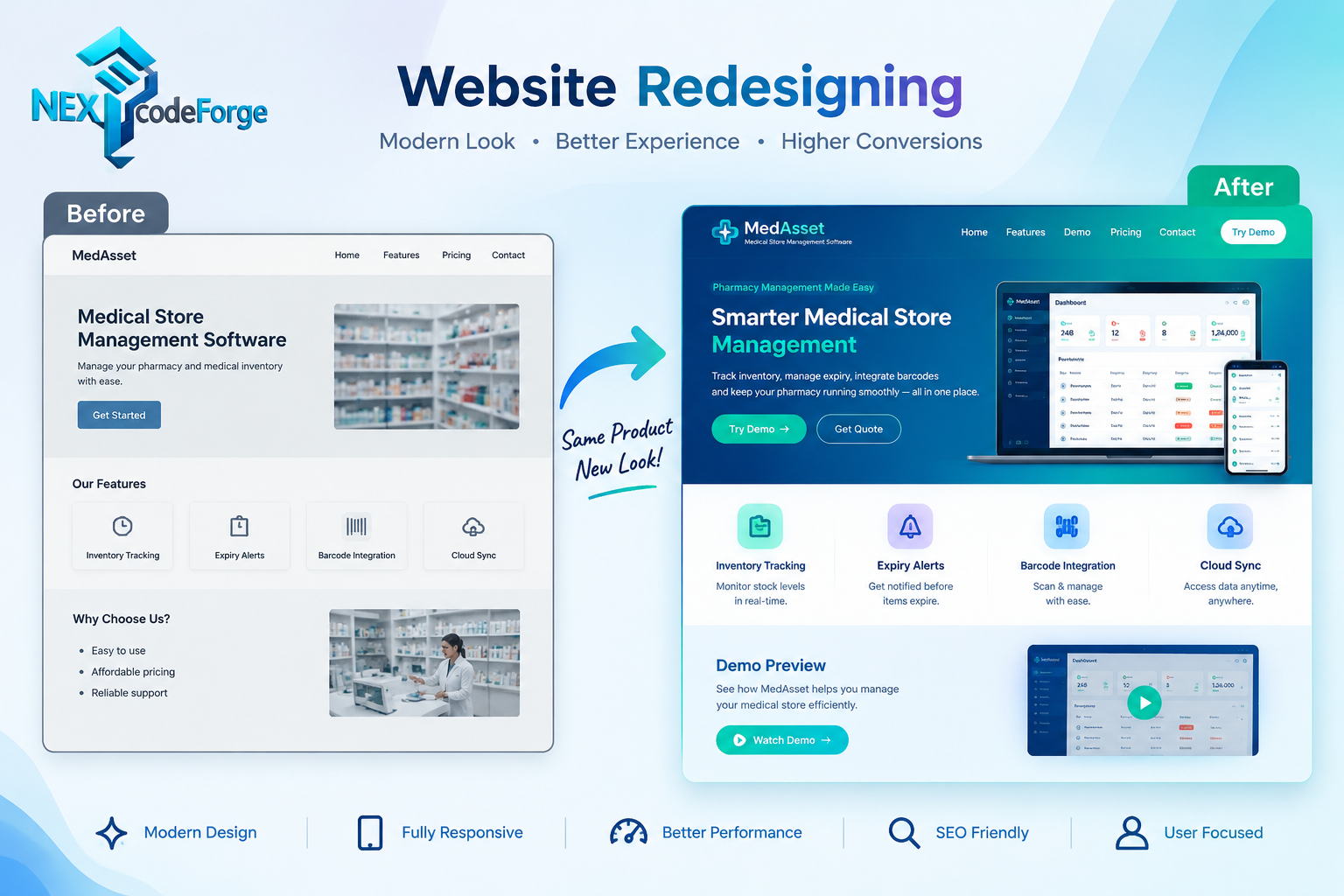
7 Signs Your Business Needs a Website Makeover
In today's digital world, your website is often the first place potential customers visit to learn about your business. Whether you run a small business, an online store, a startup, or an established company, your website plays an important role in creating a positive first impression.
However, simply having a website is not enough. Your website should look professional, work smoothly on different devices, load quickly, and make it easy for visitors to find the information they need.
If your website looks outdated, performs poorly, or fails to generate inquiries, it may be time to consider website redesigning.
At NexCodeForge, we help businesses create modern, responsive, user-friendly, and SEO-friendly digital experiences that support their online growth.
In this blog, we will explore seven signs that indicate your business website needs a redesign and explain how a modern website can improve your digital presence.
What Is Website Redesigning?
Website redesigning is the process of improving an existing website's appearance, structure, functionality, performance, and user experience.
Unlike creating a completely new website, redesigning can involve updating selected parts of your existing website or rebuilding it with a more modern approach.
A professional website redesign may include:
- Modern UI/UX design and improved layouts
- Mobile-responsive website development
- Faster loading and performance optimization
- Improved navigation and user experience
- SEO-friendly structure and content improvements
- Better contact forms and conversion-focused calls to action
- Enhanced security and website functionality
The goal is to make your website more useful for visitors while aligning it with your current business objectives.
7 Signs Your Business Needs a Website Redesign
1. Your Website Looks Outdated
Design trends, customer expectations, and digital technologies continue to evolve. A website that looked attractive several years ago may now appear outdated or unprofessional.
Old-fashioned layouts, inconsistent colors, poor typography, low-quality images, and cluttered sections can make visitors question the credibility of your business.
How redesigning helps:
A modern website design creates a clean, consistent, and professional appearance. It helps communicate your brand identity and presents your products or services more effectively.
At NexCodeForge, we focus on creating visually appealing websites that combine modern design principles with practical functionality.
2. Your Website Does Not Work Properly on Mobile Devices
Many people browse websites using smartphones and tablets. If visitors have to zoom in, scroll horizontally, or struggle to click buttons, they may leave your website without contacting you.
A responsive website adjusts its layout to different screen sizes, making content easier to read and interact with.
Google also uses the mobile version of website content for indexing, making mobile usability an important consideration for search visibility.
How redesigning helps:
- Creates layouts that adapt to mobile, tablet, and desktop screens.
- Improves readability and navigation.
- Makes buttons and forms easier to use.
- Provides a more consistent browsing experience.
A mobile-friendly website helps your business serve customers wherever they browse.
3. Your Website Loads Slowly
Website speed affects how visitors experience your business online. When pages take too long to load, users may become frustrated and leave before viewing your products or services.
Slow performance can result from oversized images, unnecessary scripts, outdated technology, inefficient code, or poor hosting configuration.
How redesigning helps:
A website redesign provides an opportunity to identify performance problems and improve loading speed through techniques such as image optimization, code improvements, caching, and reducing unnecessary resources.
A faster website makes it easier for visitors to explore your content and complete important actions.
4. Your Website Is Not Generating Enough Leads or Sales
Your website should do more than display information. It should help visitors take the next step, whether that means requesting a quotation, booking a service, purchasing a product, or contacting your team.
If your website receives visitors but generates few inquiries, its content, layout, or calls to action may need improvement.
How redesigning helps:
A conversion-focused redesign can introduce:
- Clear and visible contact information
- Strong calls to action, such as "Get a Quote" or "Contact Us"
- Simple inquiry forms
- Well-organized service and product pages
- Customer testimonials and relevant trust signals
- Clear explanations of your business benefits
These improvements help visitors understand what you offer and how they can work with you.
5. Your Website Is Difficult to Navigate
Visitors should be able to find important information without confusion. If your menus are complicated, pages are poorly organized, or contact details are difficult to locate, users may struggle to interact with your business.
Good navigation is especially important for e-commerce stores, service providers, educational platforms, and businesses with multiple offerings.
How redesigning helps:
A better website structure organizes information into clear categories and uses descriptive menus, logical page layouts, and consistent navigation elements.
For example, a business website may include:
- Home
- About Us
- Services
- Portfolio
- Blog
- Contact Us
The exact structure should depend on your business and your customers' needs.
6. Your Website Is Not Supporting Your SEO Goals
Search engine optimization helps potential customers discover your business through relevant search results. However, technical problems, weak content, confusing page structures, and missing or duplicated metadata can limit your website's search performance.
A website redesign is an opportunity to improve your site's technical foundation and content organization. However, redesigning alone does not guarantee higher rankings.
How redesigning helps:
- Improves page titles and meta descriptions.
- Organizes content with meaningful headings.
- Creates clear and descriptive URLs where appropriate.
- Improves mobile usability and page performance.
- Adds relevant internal links.
- Helps search engines discover and understand important pages.
Before changing an existing website, it is important to review its current SEO performance. If URLs change, appropriate redirects should be implemented to help visitors and search engines reach the correct pages.
7. Your Website No Longer Matches Your Business Goals
Businesses grow and change over time. You may introduce new services, expand into new markets, launch products, or update your brand identity.
If your website still reflects your old offerings, it may not communicate what your business currently provides.
How redesigning helps:
A website redesign allows you to update your messaging, showcase new services, improve your portfolio, introduce new functionality, and align your digital presence with your current business strategy.
Your website should grow alongside your business rather than hold it back.
Key Benefits of Professional Website Redesigning
A well-planned redesign can deliver several benefits when it is based on genuine user needs and business goals.
1. Stronger brand image: A consistent and modern design helps present your business professionally.
2. Better user experience: Clear navigation and organized content make your website easier to use.
3. Improved mobile usability: Responsive layouts help visitors browse on different devices.
4. Better website performance: Optimization can reduce unnecessary loading delays.
5. SEO improvements: A cleaner technical structure and useful content can support search engine visibility.
6. More opportunities for conversions: Clear calls to action and simpler user journeys make it easier for visitors to contact your business or purchase your products.
7. Room for future growth: A scalable website can accommodate new services, pages, and functionality as your business expands.
Remember that these benefits depend on implementation, website quality, competition, and how well the redesign meets your audience's needs.
Website Redesigning vs. Website Development: What Is the Difference?
Website development generally involves building a website, whether from scratch or using an existing platform. Website redesigning focuses on improving an existing website's design, usability, functionality, or performance.
For example, a new business without a website may need website development, while an established business with an outdated website may benefit from redesigning.
In some situations, redesigning requires rebuilding most or all of the website. The right approach depends on your current technology, budget, business requirements, and long-term plans.
How to Plan a Successful Website Redesign
Before redesigning your website, consider the following steps:
Step 1: Evaluate your existing website. Identify design issues, broken links, slow pages, navigation problems, and missing information.
Step 2: Define your goals. Decide whether you want more inquiries, better product sales, stronger branding, improved usability, or additional functionality.
Step 3: Understand your audience. Consider what visitors expect to find and what actions they should be able to complete easily.
Step 4: Plan the design and content. Create a clear page structure, consistent visual identity, useful content, and intuitive user journeys.
Step 5: Prioritize mobile responsiveness and performance. Make sure the redesigned website works smoothly across common devices and screen sizes.
Step 6: Review SEO before launch. Preserve valuable content and URLs where possible, map changed URLs, implement necessary redirects, and check technical SEO elements.
Step 7: Test before publishing. Check forms, navigation, links, loading performance, mobile layouts, and important website functions.
Step 8: Monitor results. Track relevant metrics such as inquiries, conversions, engagement, search visibility, and page performance after launch.
Following a structured process helps reduce avoidable problems and keeps the redesign focused on measurable business goals.
Why Choose NexCodeForge for Website Redesign Services?
At NexCodeForge, we believe your website should represent your business, communicate your value, and provide a smooth digital experience.
We offer website redesign services tailored to businesses that want to modernize their online presence and improve their website's usability.
Our approach focuses on:
- Modern UI/UX Design: Attractive layouts designed around user needs.
- Responsive Website Design: Websites built to adapt to different screen sizes.
- Performance Optimization: Improvements focused on efficient loading and functionality.
- SEO-Friendly Structure: Better-organized content and technical foundations.
- Business-Focused Solutions: Website improvements aligned with your goals.
- Maintenance and Support: Assistance in keeping your digital presence updated.
Whether you operate a small business, a startup, an online store, or an established company, we can help you explore the right website improvements for your requirements.
Conclusion
Your website is an important part of your business's digital identity. An outdated design, poor mobile experience, slow performance, or confusing navigation can make it harder for potential customers to engage with your brand.
Website redesigning is an opportunity to create a more modern, accessible, user-friendly, and business-focused online experience.
By evaluating your existing website, identifying areas for improvement, and planning a redesign around your goals, you can build a stronger foundation for your digital growth.
If your current website no longer represents your business or meets your customers' expectations, it may be time for an upgrade.
Ready to transform your website?
Connect with NexCodeForge and take the next step toward a modern digital presence.
NexCodeForge — We Build Digital Experiences That Stand Out.
🌐 Website: www.nexcodeforge.com
📧 Email: nexcodeforge@gmail.com
📞 Phone: +91 7669166975
Let's redesign your website for a better digital experience!
Leave a Reply
Your email address will not be published.